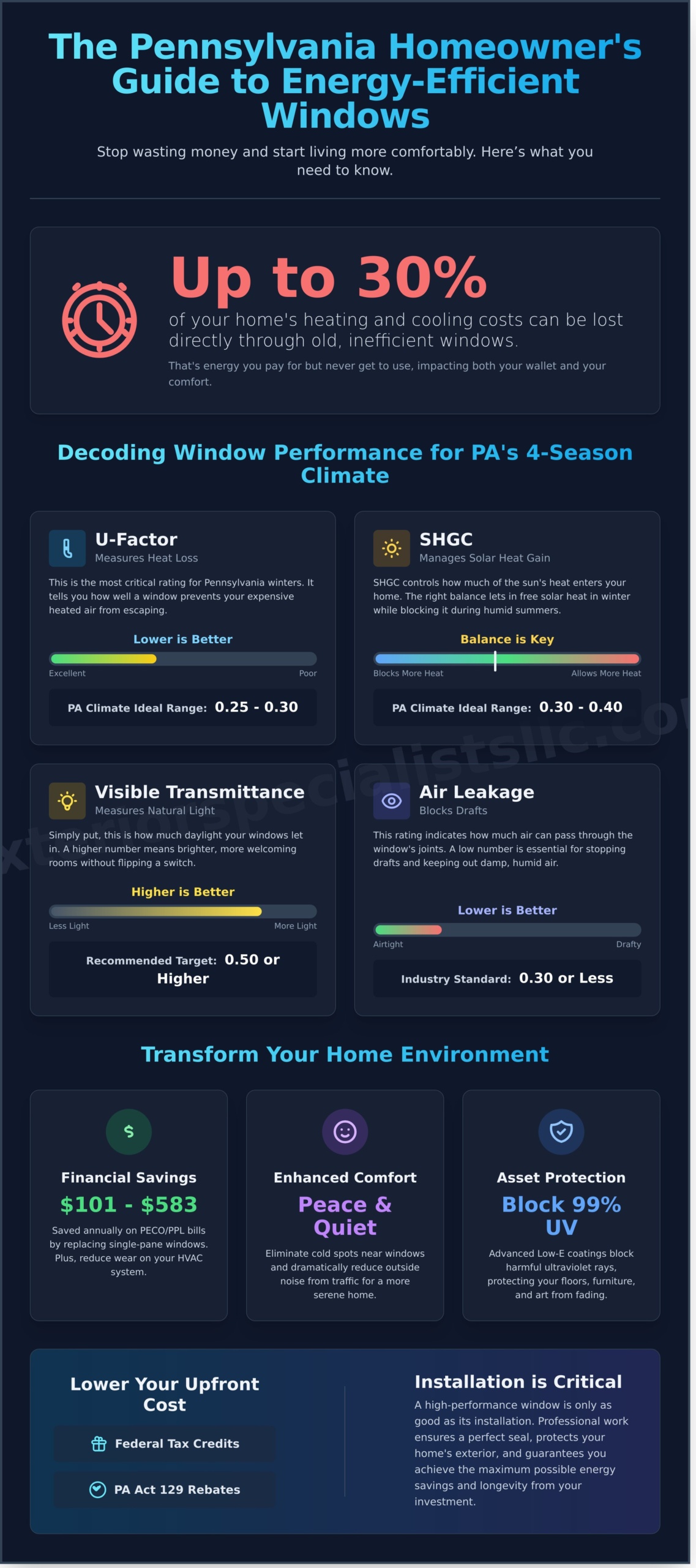
According to the U.S. Department of Energy, up to 30% of your home’s heating and cooling costs can leak directly through inefficient windows. If you live in the Philadelphia suburbs, you feel that reality every winter when the heat seems to run constantly and again on every humid summer day. For owners of older homes, especially along the Main Line, those beautiful but drafty original windows are often the main source of discomfort and sky-high utility bills.
It’s frustrating to pay for energy that you don’t even get to use. This guide is built to solve that problem, showing you exactly how to select the best energy efficient windows Pennsylvania homeowners need for our unique four-season climate. We’ll help you finally slash those monthly bills and create a more comfortable, consistent indoor environment. We will break down what U-factor and SHGC ratings actually mean for your home, compare the most durable materials, and detail what a high-quality, local installation that protects your investment should look like.
Key Takeaways
- Understand the critical U-Factor and SHGC ratings needed to conquer both humid summers and freezing winters in Southeastern Pennsylvania.
- Discover how to leverage Pennsylvania’s Act 129 and federal tax credits to significantly lower the cost of your window replacement project in 2026.
- Learn how to select the right frame material to ensure your new energy efficient windows Pennsylvania home gets the perfect blend of performance and style.
- Recognize why professional installation that protects your home’s total exterior envelope is just as crucial as the window itself for achieving maximum savings.
Why Energy Efficient Windows Matter for Southeastern Pennsylvania Homes
Living in Southeastern Pennsylvania means experiencing the full force of four distinct seasons. From humid, 90-degree days in July to sub-freezing nights in January, your home’s exterior is in a constant battle with the elements. Your windows are on the front line of this fight. Unlike a simple pane of glass, a modern energy-efficient window is an engineered system designed to stop thermal transfer. It’s a high-performance barrier that keeps your heated air inside during the winter and cooled air inside during the summer.
Think of your home as a complete system, often called the “building envelope.” Any weak point compromises the entire structure’s integrity and efficiency. For decades, single-pane windows were the standard, but they are now the single biggest source of energy loss in most older homes. Upgrading is more than a simple repair; it’s a critical investment that directly impacts your property’s value, especially in competitive Delaware County real estate markets like Newtown Square and West Chester where discerning buyers expect modern, high-performance features.
The Financial Impact: PECO and PPL Savings
The most immediate benefit of an upgrade is the relief you’ll feel when you open your monthly PECO or PPL bill. According to the U.S. Department of Energy, replacing old single-pane windows with ENERGY STAR® certified units can save homeowners between $101 and $583 per year on heating and cooling costs. Drafty, inefficient windows force your HVAC system to constantly cycle on and off, working overtime to maintain a comfortable temperature. That constant strain leads to higher energy consumption, more frequent repairs, and a shorter lifespan for your expensive equipment. Investing in the right energy efficient windows Pennsylvania homeowners need provides a clear, long-term return on investment that pays for itself in lower utility bills and reduced maintenance costs.
Beyond Savings: Comfort and Noise Reduction
The advantages of modern windows extend far beyond your bank account. They transform how you experience your home. You can finally eliminate those frustrating “cold spots” next to windows that make entire rooms uncomfortable during Pennsylvania winters. The same technology that blocks thermal transfer also provides exceptional noise insulation. For homes along busy corridors like West Chester Pike or Route 30, this means a dramatic reduction in traffic noise, creating a more peaceful and quiet living space. Furthermore, advanced glass coatings, like Low-E (low-emissivity) films, block up to 99% of harmful ultraviolet (UV) rays. This protects your hardwood floors, furniture, and artwork from the fading and sun damage that occurs over time, preserving the value and beauty of your home’s interior.
To maximize these benefits, pairing high-performance windows with quality window treatments like plantation shutters is an excellent strategy. They add an extra layer of insulation, offer precise light control, and enhance privacy. While based in the UK, you can learn more about Shutters Factory to see examples of how premium shutters can complement new windows and further boost a home’s energy efficiency.
Understanding Energy Star Ratings and Window Technology
When you see the ENERGY STAR label on a window, it’s a guarantee of quality. But the real power lies in understanding the numbers on the NFRC (National Fenestration Rating Council) sticker attached to it. These ratings aren’t just technical jargon; they are a clear roadmap to lower energy bills and a more comfortable home. They tell you exactly how a window will perform against our cold Pennsylvania winters and humid summers. These metrics are what the U.S. Department of Energy highlights when guiding homeowners on selecting new energy-efficient windows, ensuring your investment pays off.
For Delaware County homeowners, four key performance ratings matter most:
- U-Factor: This measures how well a window prevents heat from escaping your home. The lower the U-Factor, the better its insulating properties. In our climate, where heating is a major expense, we recommend a U-Factor between 0.25 and 0.30 to keep your warm air inside where it belongs.
- Solar Heat Gain Coefficient (SHGC): SHGC measures how much heat from the sun a window allows in. A low number means less solar heat. Here in Southeastern PA, you need a balance. An SHGC between 0.30 and 0.40 is often ideal, letting in some of the sun’s free heat during winter while blocking enough of it to prevent overheating in July and August.
- Visible Transmittance (VT): This is a simple measure of how much natural light comes through. A higher number, typically 0.50 or above, means more daylight. For homes on wooded lots in areas like Chester County, maximizing VT can make your indoor spaces feel brighter and more open without needing to turn on the lights.
- Air Leakage (AL): This rating indicates how much air will pass through the window’s joints. A rating of 0.30 cfm/ft² or less is the industry standard for quality. A tight seal is crucial for blocking drafts and keeping out the damp, heavy air that rolls in from the Atlantic.
The Role of Low-E Glass Coatings
At the core of modern window performance is a technology you can’t even see. In simple terms, Low-E glass acts as a transparent thermal barrier. These coatings are made of microscopic metallic layers applied to the glass surface that reflect infrared light (heat) while allowing visible light to pass through. For our mixed climate, a Low-E2 coating (two layers) often provides the perfect balance, reflecting furnace heat back inside during winter and blocking solar heat during summer. A Low-E3 coating (three layers) offers even more solar heat rejection, which can be a smart choice for south-facing windows that receive intense sun.
Gas Fills and Spacer Systems
The space between the panes of glass in a double or triple-pane window is just as important as the glass itself. This gap is filled with a dense, inert gas to slow down thermal conduction. For the vast majority of energy efficient windows Pennsylvania homeowners install, Argon gas is the best value. It’s about 34% more insulating than regular air and provides a significant performance boost. To hold the panes apart, high-performance windows use warm-edge spacers made from low-conductivity materials. This prevents the edges of the glass from getting cold, which drastically reduces condensation and inhibits the growth of mold and mildew, protecting both your window frame and your home’s air quality. Understanding how these components work together can be complex, which is why a professional window assessment can help you choose the perfect specifications for your home.
Pennsylvania Energy Rebates and Savings for 2026
Upgrading your home with high-performance windows is one of the smartest investments a Delaware County homeowner can make. It’s not just about comfort; it’s about tangible financial returns. Thanks to a combination of state, federal, and local utility programs, the initial cost of your project can be significantly reduced. These incentives are designed to reward you for improving your home’s energy footprint, making a major renovation more affordable than you might think.
The foundation for many of these savings is Pennsylvania’s Act 129, legislation that mandates utility companies offer energy efficiency programs. As we enter Phase V of this act (2026-2030), funding for these programs remains a state priority. On top of state-level initiatives, the federal government offers the Energy Efficient Home Improvement Credit through the Inflation Reduction Act. This provides a direct tax credit of 30% of the cost for new windows and skylights, capped at $600 annually. This credit is available through 2032, giving you a long window of opportunity to save.
A critical detail many homeowners overlook is that nearly all of these programs require professional installation. You can’t simply buy windows at a big-box store and claim a rebate. Why? Utilities and government agencies need to ensure the high-performance windows are installed correctly to deliver their promised energy savings. A flawed installation can create air leaks and moisture problems, completely negating the window’s efficiency. Proof of installation by a licensed and insured contractor like Exterior Specialist LLC is your ticket to qualifying for these valuable savings.
Navigating PECO and PPL Incentives
For homeowners in our area, PECO and PPL Electric Utilities are the primary sources for direct rebates. Based on current Act 129 funding cycles, we project 2026 rebates for ENERGY STAR® Most Efficient windows to be between $15 and $25 per unit. To ensure a smooth rebate process, you’ll need meticulous documentation:
- An itemized invoice showing the model numbers and cost per window.
- The official ENERGY STAR® or NFRC labels from each window you installed.
- A signed certificate of professional installation from your contractor.
These programs typically run on a calendar year basis with a December 31st deadline, but funding is finite. It’s best to complete your project earlier in the year before the program’s budget is exhausted.
Financing Your Energy Upgrade
Even with rebates, new windows are a significant project. Fortunately, Pennsylvanians have excellent financing options. The Keystone Energy Efficiency Program (KEEP) offers low-interest loans, often between 2.99% and 4.99% APR, specifically for energy upgrades. This is often more favorable than a home equity line of credit (HELOC), which can have variable rates. We can also connect you with trusted contractor-led financing for maximum convenience. To see how quickly your investment pays off, you can calculate the breakeven point: (Total Cost – Rebates) / Annual Energy Savings = Years to Recoup Investment. For many homeowners installing energy efficient windows Pennsylvania, this payback period is often between 8 and 12 years.
Choosing the Right Window Materials for the Main Line Climate
Your home’s windows face a tough job in our region. They endure humid, 90-degree summer days and frigid, icy winters. This constant swing in temperature and moisture causes window frame materials to expand and contract, putting immense stress on the seals. A broken seal leads directly to energy loss, drafts, and condensation between the panes. Choosing the right material isn’t just about looks; it’s about long-term performance and protecting your investment.
Here’s a breakdown of the top materials for our local climate:
- Vinyl: The Cost-Effective Champion. For most modern homes in Delaware County suburbs, high-quality vinyl is the workhorse. It doesn’t require painting, won’t rot from our humid air, and offers excellent thermal performance with insulated frames. Modern vinyl windows deliver a strong return on investment, making them a practical and popular choice.
- Wood: The Historic Standard. For the classic stone homes in Radnor and Gladwyne, nothing matches the warmth and historic integrity of wood. While it requires more maintenance, modern wood windows often feature an aluminum or vinyl-clad exterior. This gives you the authentic wood interior you want with a durable, weather-resistant shell that stands up to Pennsylvania’s climate.
- Fiberglass and Composites: The Ultimate in Durability. If you’re looking for peak performance, fiberglass is the answer. This material is incredibly stable. Industry data shows fiberglass expands and contracts up to 800% less than vinyl, meaning the seal between the frame and glass is far less likely to fail over the decades. For homeowners seeking the most durable and energy efficient windows Pennsylvania has to offer, fiberglass provides unmatched thermal stability and longevity.
When considering which material is right for your home, looking at offerings from established companies can provide clarity. For instance, providers serving the broader region, such as Window Galaxy USA, often showcase a wide range of these options, helping homeowners compare durability and aesthetics firsthand.
Matching Architectural Styles in Delaware and Chester Counties
The right material must be paired with the right style to complement your home’s character. Double-hung windows remain the classic choice for the region’s many Colonial and Craftsman homes, preserving their timeless appeal. For more modern builds, casement windows create a tighter seal when closed and open wide to maximize ventilation. For historic renovations in West Chester and Media, we can source custom shapes and sizes to meet strict preservation guidelines while upgrading performance.
The Importance of Professional Measurements
The older homes in our area have character, but they are rarely perfectly square. An “off-the-shelf” window from a big-box store almost never provides a perfect fit. Installers are forced to fill gaps with expanding foam and caulk, which will inevitably fail and create drafts. Our process begins with precise, professional measurements. We identify potential structural issues, like sagging headers or out-of-plumb frames, before your window is ordered. A window is only as efficient as its fit.
Ensuring your new windows are properly measured and installed is the most critical step in guaranteeing their performance. If you suspect your current windows are costing you money, schedule a free, no-obligation window inspection with our team today.
Professional Window Installation in Newtown Square and Beyond
Selecting high-performance windows is a critical first step, but their energy-saving potential is only realized through flawless installation. At The Exterior Specialist LLC, we don’t just see a window opening; we see a component of your home’s total protective envelope. A window improperly sealed can negate the benefits of triple-pane glass, creating drafts and allowing moisture intrusion that compromises your home’s structure. That’s why our approach considers how your windows, siding, and roofing work together as a single, high-performance system.
Your home is your most significant investment. We protect it by exclusively using licensed and insured installation crews for every project on the Main Line. This isn’t just about compliance; it’s about accountability. An insured team protects you from liability, while a licensed professional ensures the work meets or exceeds Pennsylvania’s stringent building codes. This commitment to professionalism guarantees that your installation is done right the first time, securing your warranty and your peace of mind.
Our process is built on clarity and respect for your property. It’s a straightforward, transparent system designed to give you confidence from start to finish:
- Free Home Inspection: We start with a thorough, no-obligation assessment of your existing windows and surrounding structures to identify any underlying issues.
- Precise Measurement & Custom Order: Every window is custom-ordered based on meticulous measurements, ensuring a perfect, airtight fit for your home.
- Scheduled Installation: We work with your schedule to find a convenient time and provide a clear project timeline.
- Site Protection & Debris Removal: Our team protects your home and landscaping as if it were their own and performs a complete cleanup, leaving your property pristine.
For homeowners aiming for peak thermal performance, we often recommend pairing a window replacement with a siding or roofing upgrade. Installing new energy efficient windows Pennsylvania homes require is powerful, but when combined with insulated siding or a properly ventilated attic, you create an almost impenetrable barrier against energy loss, potentially reducing your HVAC costs by up to 30% annually. If you’re considering a comprehensive exterior upgrade, our siding estimate Chester County guide provides detailed cost breakdowns and planning insights for homeowners throughout the Main Line area.
What to Expect During Your Installation
A typical full-house replacement of 12-15 windows in a Delaware County home takes our crew just 2 to 3 days. We lay down protective drop cloths on all interior flooring and use heavy-duty mats to protect your lawn and garden beds from foot traffic and equipment. After the installation, we conduct a final walkthrough with you, demonstrating every window’s operation and confirming every seal is perfect and every lock is secure.
Start Your Energy Saving Journey Today
Ready to see how new windows can transform your home’s comfort and value? Scheduling your free energy efficiency consultation is simple. As a local Delaware County contractor, we have years of hands-on experience navigating municipal building codes and permit requirements, from Radnor to Media. This local expertise saves you time and prevents costly delays. Don’t wait for another season of high energy bills. Contact Exterior Specialist LLC for your free estimate today!
Your Next Step to a More Comfortable Pennsylvania Home
Choosing the right windows is a smart investment in your home’s comfort and value. By understanding Energy Star ratings for our four-season climate and leveraging 2026 Pennsylvania energy rebates, you can significantly lower your utility bills. For homeowners seeking the best energy efficient windows Pennsylvania has to offer, the combination of high-performance materials and professional installation is what delivers real, long-term savings.
You don’t have to navigate this process alone. Exterior Specialists LLC has been serving Southeastern PA communities like Newtown Square and the Main Line since 1990. As a fully licensed and insured local contractor with an A+ rating for craftsmanship and integrity, we provide the peace of mind that your home’s exterior is in expert hands. When considering comprehensive exterior improvements, working with an experienced siding contractor Chester County PA homeowners trust ensures your entire building envelope works together for maximum energy efficiency and protection.
Are you ready to stop losing money through old, drafty windows? Get Your Free Energy Efficiency Window Estimate and let our team show you the difference true quality makes. A more comfortable, cost-effective home is closer than you think.
Frequently Asked Questions About Energy Efficient Windows
Are energy efficient windows worth it in Pennsylvania?
Absolutely. Upgrading to energy efficient windows in Pennsylvania is a smart investment due to our four-season climate. The U.S. Department of Energy estimates that replacing old single-pane windows with ENERGY STAR certified models can save homeowners between $101 and $583 annually. These high-performance windows reduce strain on your HVAC system during cold winters and hot summers, leading to direct savings and a more comfortable home year-round while also increasing your property value.
What is the best U-factor for windows in the Southeastern PA climate?
For the Southeastern PA climate, you should look for windows with a U-factor of 0.22 or less. This rating meets the 2023 ENERGY STAR Version 7.0 criteria for our Northern Climate Zone. The U-factor measures how well a window prevents heat from escaping your home; a lower number signifies better insulation. Choosing a window with a U-factor of 0.22 or below ensures you get superior performance that keeps your home warmer in the winter and your energy bills down.
How much can I save on my PECO bill with new windows?
You can expect a noticeable reduction in your monthly PECO bill. While individual savings vary, the U.S. Environmental Protection Agency reports that households replacing single-pane windows with ENERGY STAR certified products save an average of 12% on energy bills. For a typical home, this can translate to hundreds of dollars per year in real savings. It’s a high-impact upgrade that provides a measurable return on investment by lowering your heating and cooling costs.
Do I need a permit to replace windows in Delaware County, PA?
In most cases, you don’t need a permit for a direct, same-size window replacement in Delaware County. However, a permit is required if you are altering the size of the window opening, as this is considered a structural change. Rules can vary slightly by township, from Haverford to Radnor. As a licensed and insured local contractor, we handle the entire process and will secure any necessary permits to ensure your project fully complies with all local building codes.
What is the difference between double-pane and triple-pane windows?
The primary difference is an extra pane of glass and a second insulating gas-filled chamber in triple-pane windows. This additional layer makes triple-pane windows up to 30% more energy-efficient than their double-pane counterparts. They provide superior insulation, which further lowers your energy bills. Triple-pane windows also offer a significant improvement in sound reduction, capable of blocking an additional 5 to 10 decibels of outside noise for a quieter, more peaceful home.
How do I know if my current windows need to be replaced?
You can identify failing windows by looking for a few key signs. If you feel a draft, see condensation or fog between the glass panes, or have difficulty opening and closing them, it’s time for a replacement. Other clear indicators include soft or chipping frame material, which suggests water damage, and an increase in audible outside noise. These issues show that your window’s seals and structural integrity have been compromised, costing you money and comfort.
Can I get a tax credit for installing energy-efficient windows in 2026?
Yes, under the current federal guidelines, tax credits for energy-efficient home improvements are available through December 31, 2032. The Inflation Reduction Act of 2022 allows homeowners to claim a credit for 30% of the total project cost for new windows and skylights. This credit is capped at $600 annually. To qualify, the windows must meet specific ENERGY STAR performance criteria, a standard that all our recommended window products meet or exceed.
How long does it take to install new windows in a typical PA home?
Our professional crew can typically complete a standard installation of 8 to 10 replacement windows in a single workday. A whole-house project with 15 or more windows is usually finished within two days. We pride ourselves on a clean and efficient process that minimizes disruption to your daily life. Our team works diligently to ensure each window is installed with precision for a perfect, weather-tight seal, protecting the integrity of your home’s exterior envelope.
