In Pennsylvania, the difference between a lifetime of summer memories and a structural disaster often comes down to just six inches of concrete. While a 36 inch depth is the standard baseline for frost protection, local soil density and regional variations can quickly change the math on your project. You likely worry about your deck heaving during a harsh winter or shifting as the ground thaws in the spring. It’s a valid concern because your home is your most vital investment. Understanding the specific deck footing requirements PA mandates is the only way to ensure your outdoor space remains safe and stable for decades.
This guide provides the clarity you need to handle the 2026 building codes with total confidence. We will detail the exact frost line depths required across the state, explain when you need a permit for decks over 30 inches high, and outline the inspection steps required to get your project approved on the first try. You’ll finish this article with a clear roadmap to a foundation that stands the test of time and protects your property’s value.
Key Takeaways
- Learn how to prevent “frost heave” from damaging your outdoor investment by understanding the role of structural anchors in Pennsylvania’s climate.
- Discover the specific deck footing requirements PA mandates, including the “Bottom-of-Footing” rule that ensures your foundation sits safely below the frost line.
- Identify how regional soil types, such as Southeast PA clay, impact the necessary size and design of your deck’s structural footprint.
- Master the permitting sequence to avoid project delays, specifically why the “Hole Inspection” is a non-negotiable step before pouring concrete.
- Understand how professional installation techniques and specialized machinery provide a level of structural stability that exceeds basic building codes.
Why Deck Footing Requirements in PA Matter for Your Home
Your deck is an extension of your home’s living space. It’s where you host family gatherings and enjoy quiet mornings. However, the longevity of that space depends entirely on what lies beneath the surface. Deck footings serve as the structural anchor for the entire build. They distribute the weight of the structure, furniture, and guests into the ground. When these footers are inadequate, the entire investment is at risk. Following the deck footing requirements PA mandates isn’t just a matter of following the law. It’s about protecting your home from the unpredictable shifts of the local landscape.
Building to code ensures your deck remains level and secure for decades. Many homeowners view inspections as a hurdle to clear. In reality, these regulations exist to prevent structural failure. A deck that sinks or shifts can pull away from your house, causing damage to your siding and rim joists. By prioritizing a solid foundation, you ensure that your outdoor project adds genuine value to your property rather than becoming a future liability.
The Science of Frost Heave in Southeast PA
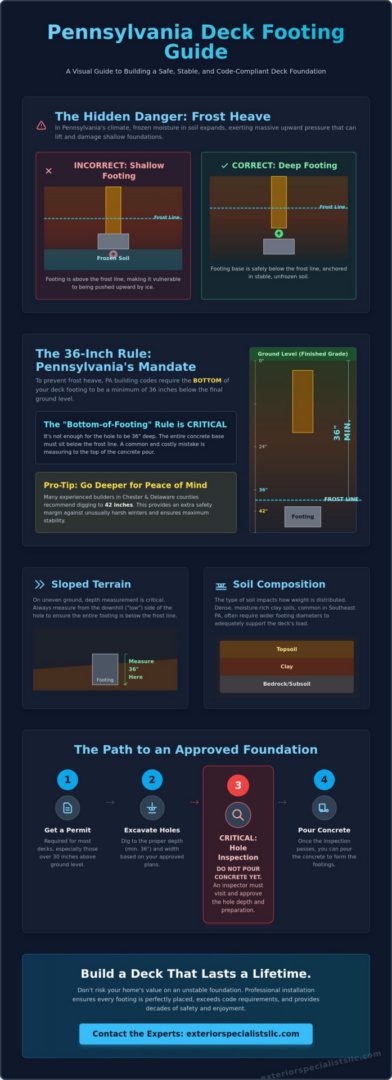
Pennsylvania soil contains significant amounts of moisture. During the freezing winters in areas like Radnor and Newtown Square, this moisture turns to ice and expands. This process, known as frost heaving, exerts massive upward pressure on anything buried in the ground. If your footings are too shallow, the ice will literally lift your deck out of the earth. When the ground thaws, the deck doesn’t always settle back into its original position. This cycle leads to warped boards, cracked railings, and doors that no longer latch. This is why “floating” decks are often restricted for attached structures; they simply can’t provide the stability needed to stay flush with your home’s foundation.
Safety and Liability Considerations
Safety is the primary driver behind strict building codes. This is especially true for multi-level custom decks where a collapse could be catastrophic. Beyond physical safety, there are significant financial risks to consider. Insurance companies often look for reasons to deny claims related to structural failure. If an investigation reveals that your project didn’t meet deck footing requirements PA standards, you might find yourself responsible for repairs or legal fees out of pocket. Retrofitting a failed foundation is significantly more expensive than installing it correctly during the initial build. Doing the work right the first time preserves your peace of mind and your bank account.
The 36-Inch Rule: Pennsylvania Frost Line and Depth Requirements
In Pennsylvania, the frost line is the specific depth where the soil does not freeze even during the peak of winter. To satisfy the deck footing requirements PA building inspectors look for, your footings must reach a minimum of 36 inches below the finished grade. This depth ensures that the ground beneath your foundation remains stable year-round. While 36 inches is the legal baseline, many regional experts recommend digging to 42 inches. This extra depth provides a safety buffer against the record-breaking cold snaps that occasionally hit Chester and Delaware counties, giving you added peace of mind that your structure won’t budge.
It’s vital to understand the “Bottom-of-Footing” rule. A common mistake is thinking the top of the concrete should sit at the 36-inch mark. In reality, the entire base of the concrete footer must sit below the frost line. If the bottom of your pier is only 30 inches deep, ice can still form underneath the concrete and push the entire post upward. By placing the base deep enough, you anchor the deck in soil that remains unfrozen and solid. If you’re feeling overwhelmed by the technical specs of your project, a seasoned partner can simplify the process. We specialize in building custom decks that blend beautiful design with the structural integrity your home deserves.
Measuring Depth on Sloped Terrain
Landscapes in West Chester and Berwyn are rarely perfectly flat. When you dig on a slope, you must measure the 36-inch depth from the “low side” or downhill edge of the hole. If you only measure from the uphill side, the downhill portion of your footing will be too shallow. This error leaves the foundation vulnerable to both frost and soil erosion over time. We carefully adjust post heights on these uneven grades to ensure the deck surface remains perfectly level while the footings stay firmly anchored in the earth.
Footing Diameter and Load Distribution
Depth is only half of the equation; the width of your concrete pier is just as important. The diameter determines how well the ground can support the weight of the structure, furniture, and guests. A standard 12-inch pier might suffice for a small platform, but larger spans or multi-level designs often require 18-inch diameters to distribute the load effectively. We often use a “flared” or bell-shaped base at the bottom of the hole. This wider footprint increases the surface area, which prevents the deck from sinking into softer clay soils over the years.
Soil Composition in SE PA: Impact on Footing Design
Soil isn’t just dirt; it’s the partner that supports your entire structure. In Delaware County, the heavy clay content means the ground behaves differently than the sandy loams found in other regions. Clay holds moisture and expands significantly, which puts unique pressure on your foundation. This movement requires larger footing diameters to distribute the deck’s weight over a wider area. If you ignore the specific deck footing requirements PA inspectors look for regarding soil capacity, you risk your deck sinking or tilting as the seasons change.
Newer developments in Southeastern PA present a hidden challenge called “disturbed soil.” When a home is built, the earth around the foundation is excavated and then backfilled. This loose fill is far less dense than the original, untouched earth. Building a deck on this uncompacted soil leads to settling and structural cracks. We always dig through this backfill to reach the “undisturbed” native soil. This ensures your custom deck or sunroom sits on a solid, non-moving base. For large-scale home additions, we often recommend a professional soil test to determine the exact bearing capacity of your property.
Low-lying areas in Chester County often face high water tables. Saturated soil loses its ability to support heavy loads. In these zones, we adjust our designs to include wider footings or flared bases to prevent the structure from “punching” through the soft ground. This proactive approach turns a potential structural failure into a long-term success.
Navigating Rocky Terrain in Newtown Square
Many properties in Newtown Square and along the Main Line sit on solid “blue stone” or bedrock. If you hit solid rock before reaching the 36-inch mark, you can’t simply stop digging. We use code-compliant anchoring methods that involve pinning the post directly to the rock using heavy-duty steel anchors and industrial epoxy. This process requires specialized hammer drills and diamond-tipped bits. While it’s more labor-intensive, it creates an incredibly stable foundation that’s essentially part of the earth itself.
Drainage and Concrete Integrity
Even a deep footing can fail if water pools at the bottom of the hole. We use a layer of compacted gravel at the base of our excavations to facilitate proper drainage. This prevents water from sitting against the concrete, which can cause degradation over time. To ensure maximum durability, we prioritize 3000 PSI concrete for all local projects. This high-performance mix is designed to withstand the intense pressure of Pennsylvania’s freeze-thaw cycles without cracking or crumbling.
The Permitting and Inspection Process in PA Townships
Securing a building permit is the first essential step in any structural project. In Pennsylvania, you must obtain a permit for any deck that is more than 30 inches above the ground or attached to your home. This process ensures your plans align with the Uniform Construction Code (UCC). It’s a layer of protection for you and your neighbors. While the paperwork might feel like a hurdle, it serves as a professional validation of your project’s safety. Following the deck footing requirements PA townships enforce prevents costly mistakes before they are literally set in stone.
The most critical stage of this process is the pre-pour footing inspection, often called the “hole inspection.” You cannot pour concrete until a township official visits your site to verify the depth and diameter of your excavations. In municipalities like Radnor and Media, inspectors are particularly thorough about checking for “disturbed soil” at the bottom of the hole. If they find loose dirt or standing water, they’ll likely fail the inspection. This requires you to clean the hole and schedule a re-inspection, which can delay your project by several days. We manage this sequence with precision to keep your build moving forward without friction.
Preparing Your Permit Application
Your application must include detailed site plans, footing diagrams, and specific load calculations. These documents prove that your foundation can support the 40 pounds per square foot live load required by state code. Navigating these technical requirements is much simpler when you partner with an experienced remodeling contractor on the Main Line PA. We handle the heavy lifting of the paperwork, ensuring your submission is complete on the first try. In 2026, typical lead times for permit approval in Southeast PA townships range from 10 to 20 business days, so early planning is vital.
What to Expect During the Footing Inspection
On the day of your inspection, your holes must be completely free of debris and water. The inspector will use a measuring tape to confirm the 36-inch minimum depth we discussed in previous sections. They also look for proper post-to-footing connections, such as galvanized steel anchors, to ensure the deck won’t lift or shift. Once you receive the “green tag” or official sign-off, you’re clear to pour your concrete. If you want to skip the stress of township red tape, contact us today to manage your deck project from permit to final inspection.
Ensuring Longevity with Professional Deck Installation
Meeting the deck footing requirements PA inspectors demand is just the starting point for a high-quality build. Professional craftsmanship means looking beyond the minimum standards to ensure your deck remains a permanent, stable part of your home. We use specialized machinery to reach that precise 36-inch depth without disturbing the surrounding soil. This mechanical precision prevents the settling issues that often plague hand-dug holes. Our approach also includes advanced moisture protection at the post-to-footing connection, shielding your lumber from the rot that typically begins where the wood meets the concrete.
A warrantied structural foundation provides a level of peace of mind that DIY projects simply can’t match. When you invest in a professional installation, you’re buying more than just labor; you’re buying a guarantee that your deck won’t sink, tilt, or pull away from your house. We prioritize structural soundness and high performance in every material we select. This focus ensures that your outdoor investment remains a safe and attractive space for your family for decades. By doing the work right the first time, we eliminate the hidden costs of future structural failure.
The Exterior Specialist LLC Difference
With a history of building in Delaware and Chester Counties for over 30 years, we understand the specific nuances of our regional terrain. Our neighborly approach means we treat your home with a high sense of accountability; we never cut corners on the structural components you can’t see once the deck boards are installed. We take full responsibility for coordinating all township inspections. This proactive management keeps your project on a steady, logical schedule and removes the stress of dealing with local bureaucracy. You can trust our seasoned craftsmen to lead your project to a successful, code-compliant conclusion.
Start Your Outdoor Transformation Today
A great outdoor living space starts with a solid, well-engineered plan. We offer a no-obligation introductory consultation to help you understand the structural possibilities for your property. Whether you are looking for custom decks or want to integrate footings into comprehensive patio and hardscape designs, we provide a holistic solution. Our goal is to act as the guardian of your home’s exterior structure. Contact Exterior Specialist LLC for your 2026 deck build and let’s start building a foundation you can depend on.
Build Your Foundation for a Lifetime of Summer Memories
Designing a deck that lasts requires more than just high-quality boards and a beautiful layout. It demands a deep understanding of the specific deck footing requirements PA townships enforce to combat our regional freeze-thaw cycles. You now know that reaching the 36-inch frost line and accounting for local clay or bedrock is the only way to protect your property investment from the destructive force of frost heave. By following the proper permitting and inspection sequence, you ensure your project is safe, legal, and built to endure for decades.
Since 1990, we’ve helped homeowners across Delaware, Chester, and Montgomery Counties navigate these complex codes with total confidence. Our 30+ years of local expertise allows us to provide comprehensive design-build services that prioritize structural soundness and lasting peace of mind. We take pride in our craftsmanship and our deep roots in this community. If you’re ready to start your next outdoor project, we’re here to lead the way to a successful result. Schedule Your No-Obligation Deck Consultation with Our PA Experts today and build a foundation that stands the test of time.
Common Questions About Pennsylvania Deck Footings
Do I need a permit for a deck in PA if it’s not attached to the house?
Yes, you need a building permit for any deck that is more than 30 inches above the ground at any point, regardless of whether it’s attached to your home. Freestanding decks must still comply with safety regulations regarding structural stability and guardrails. Local municipalities administer the Uniform Construction Code, so it’s vital to verify height thresholds with your township office before starting any excavation or construction.
Can I use pre-cast concrete deck blocks instead of digging footings in PA?
Generally, you cannot use pre-cast blocks for decks that are attached to a house or exceed 30 inches in height. These “floating” foundations don’t reach the required 36 inch frost line, making them susceptible to movement during freeze-thaw cycles. Most Pennsylvania building codes require permanent, poured-in-place concrete footings to ensure the deck doesn’t shift and cause damage to your home’s ledger board or siding.
What is the standard frost line depth for Delaware County, PA?
The standard frost line depth for Delaware County is a minimum of 36 inches below the finished grade. This depth ensures the base of your concrete footer sits in soil that remains unfrozen throughout the winter. To meet the deck footing requirements PA inspectors look for, we often dig to 42 inches. This provides a reliable safety buffer against the record-breaking cold snaps common in our region.
How wide should my deck footings be for a standard 12×12 deck?
A standard 12×12 deck typically requires footings with a diameter of at least 12 inches, but the exact width depends on your post spacing and soil type. If you’re building on the heavy clay found in Southeast PA, wider footings or flared bases are often necessary to distribute the weight. We calculate the specific load-bearing needs of your structure to prevent the concrete from sinking into softer ground over time.
What happens if I hit a utility line while digging my deck footings?
Stop digging immediately and contact the utility company or call 811 if you damage a line. You are required by law to call PA One Call at least three business days before you begin any digging project to have underground lines marked. Hitting a line is a significant safety risk and can result in expensive repair fees. We handle all utility marking requests as part of our professional site preparation process.
Does Pennsylvania require a specific type of concrete for deck footings?
Pennsylvania building codes typically require concrete with a minimum compressive strength of 2500 to 3000 PSI for residential footings. This high-performance mix provides the durability needed to support the deck’s weight and resist the pressure of expanding frozen soil. Using the correct PSI ensures the foundation won’t crack or crumble, which is essential for the long-term structural integrity of your outdoor living space.
Can I pour concrete footings myself, or do I need a licensed contractor?
You can technically pour the footings yourself, but you must still pass a mandatory “hole inspection” from your township before the concrete is added. Many homeowners find that meeting the precise deck footing requirements PA mandates is difficult without professional equipment. A seasoned contractor ensures the holes are clean, deep enough, and properly aligned, which prevents costly inspection failures and keeps your project moving forward on schedule.
How do I find out the specific deck footing requirements for my township?
You should visit your local township or borough’s website and look for the Building Department or Code Enforcement section. Most municipalities provide downloadable permit applications and “deck tip sheets” that outline local amendments to the state code. Since over 90% of PA municipalities administer the code locally, talking directly to your local inspector is the best way to confirm specific depth and diameter rules for your neighborhood.
