Last August, a homeowner in West Chester watched as the 12th humid day in a row caused their old wood siding to swell and trap moisture against the frame. Most people think the choice is just about color, but in Southeastern Pennsylvania, your siding is your home’s primary defense against 40 inches of annual rainfall and fluctuating temperatures. When weighing vinyl vs fiber cement siding PA families often struggle to balance upfront costs against long-term performance.
It’s frustrating to invest thousands into a renovation only to see cheap materials crack after a single hailstorm or fade under the summer sun. You want a home that looks sharp and stays efficient without requiring a weekend of maintenance every month. This guide provides a direct comparison of these two powerhouses, tailored to the unique architectural styles and weather patterns of our local communities. You’ll discover which material offers the best protection against storm damage and how the right choice can reduce your monthly energy bills by up to 15%. We’ll look at everything from installation technicalities to the total cost of ownership so you can make an informed decision for your home’s future.
Key Takeaways
- Understand how Southeastern PA’s unique weather patterns, from Nor’easters to high humidity, dictate which siding material will best protect your home’s structural integrity.
- Evaluate the aesthetic and performance differences of vinyl vs fiber cement siding PA to choose a solution that balances long-term durability with your neighborhood’s architectural style.
- Break down the initial investment and labor costs to determine which material offers the highest return on investment for properties in West Chester and Newtown Square.
- Learn the critical role of moisture barriers and professional installation techniques in preventing the “humidity traps” common in Delaware Valley homes.
- Discover how partnering with a local, licensed expert ensures your renovation meets specific PA building codes and proceeds smoothly through the permitting process.
Understanding Siding Options for Southeastern PA Homes
Your home’s exterior is its first line of defense against the unpredictable weather in West Chester and Newtown Square. Choosing between vinyl vs fiber cement siding PA homeowners often debate isn’t just about curb appeal; it’s about protecting your largest investment. Since the 1950s, when aluminum and basic plastics dominated the market, technology has shifted toward materials that meet strict 2026 energy and durability standards. Today, your siding acts as the primary guardian of your home’s envelope, preventing moisture infiltration that can lead to structural rot.
Exterior Specialists LLC views every siding project as a total exterior solution. Whether you’re dealing with storm damage or updating an aging facade, the material you choose dictates your maintenance schedule for the next 30 years. Local renovations require a “boots-on-the-ground” understanding of how humidity and freeze-thaw cycles impact different substrates. We’ve seen how the right choice preserves the integrity of the entire structure.
What is Vinyl Siding?
Modern vinyl consists of a PVC-based cladding that is both lightweight and flexible. It remains the most popular budget-friendly choice in Delaware County because it’s virtually maintenance-free and never needs painting. Many homeowners now opt for “insulated vinyl,” which features a contoured foam backing. This specific advancement can improve a wall’s thermal performance by providing an additional R-value of 2.0 to 3.5, which helps lower heating costs during bitter PA winters.
What is Fiber Cement Siding?
Combining Portland cement, sand, and cellulose fibers creates an extremely rigid and durable board known as fiber cement. Brands like James Hardie are the standard for high-end PA remodels due to their ability to mimic natural wood without the risk of pest damage or rot. These products are engineered for the HZ5 climate zone, a specific designation for the Northeast that ensures the material withstands extreme temperature swings and high moisture levels without cracking.
Vinyl vs. Fiber Cement: A Side-by-Side Comparison
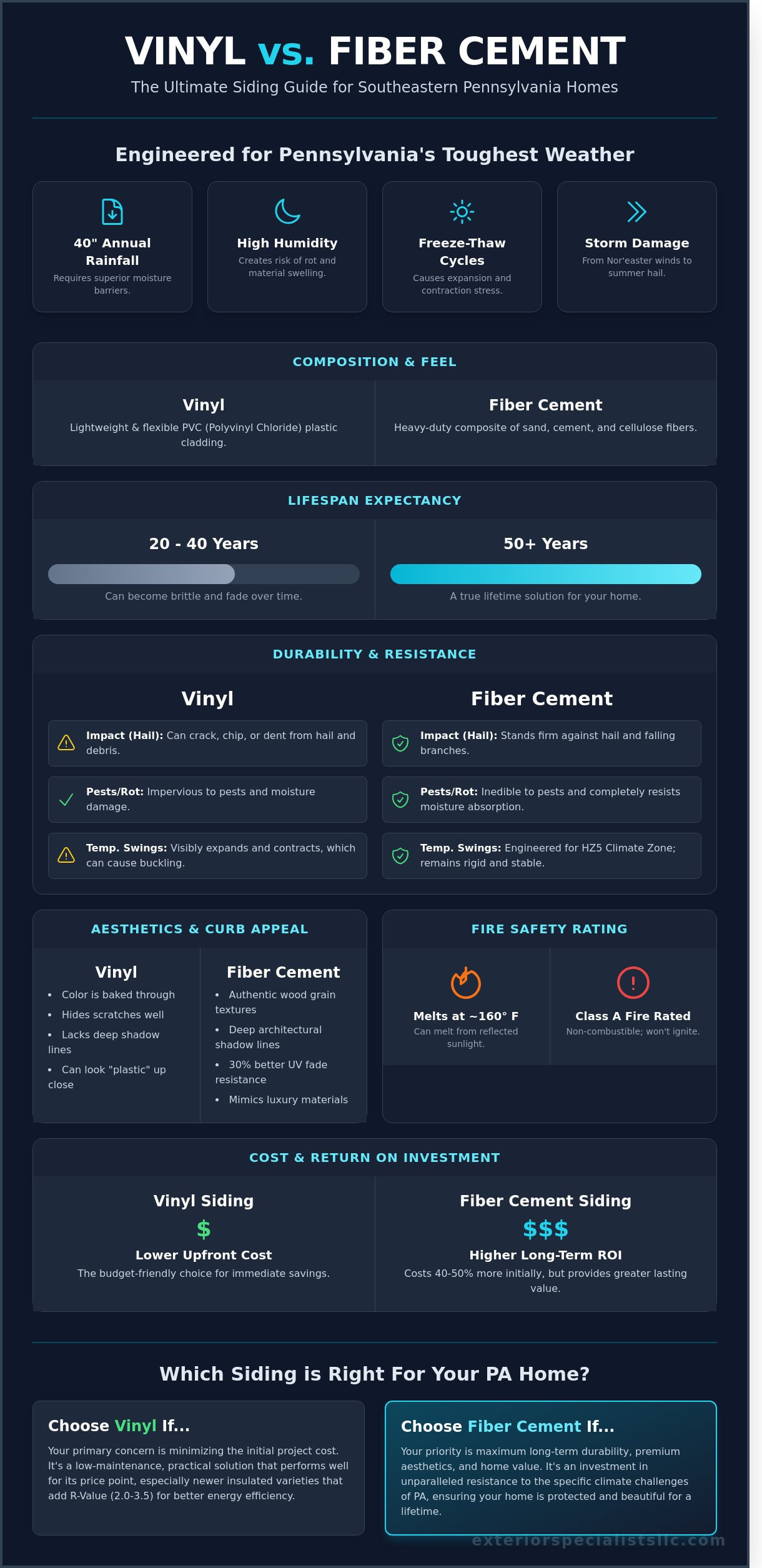
Choosing between vinyl vs fiber cement siding PA homeowners often find is a choice between immediate savings and long-term structural integrity. Vinyl consists of lightweight PVC plastic that expands and contracts with the seasons. Fiber cement is a heavy-duty composite of wood pulp, sand, and Portland cement. This density provides a rigid shell that doesn’t buckle under the stress of shifting temperatures. It feels solid to the touch and provides a level of impact resistance that plastic simply cannot match.
Durability and Lifespan Expectancy
A standard vinyl installation typically lasts 20 to 40 years before the panels become brittle or fade. Fiber cement offers a 50-year potential lifespan, making it a true lifetime solution for your property. Montgomery County summers often reach 70 percent humidity; conditions that invite rot and woodpeckers to traditional wood. Fiber cement is inedible to pests and resists moisture absorption entirely. When 1-inch hail hits during a summer storm, vinyl can crack or chip. Fiber cement stands firm against impact damage and falling branches, maintaining the home’s protective envelope.
Aesthetic Versatility and Curb Appeal
Homes in Radnor and Berwyn require a sophisticated look to match their iconic stone exteriors. Fiber cement provides deep, authentic wood grains that are nearly indistinguishable from real cedar planks. While vinyl uses through-body pigment to hide scratches, it lacks the architectural shadow lines found in heavier materials. Fiber cement finishes resist UV fading 30 percent better than standard field-applied paint, keeping your home’s color vibrant for decades. You can choose between smooth contemporary finishes or rugged textures to suit your neighborhood’s specific character.
Safety is a priority for any local family. Fiber cement holds a Class A fire rating; it won’t ignite when exposed to direct flame and doesn’t act as fuel for a fire. Vinyl is a thermoplastic that begins to melt at roughly 160 degrees Fahrenheit, which can happen even from the reflection of high-efficiency windows nearby. For residents in Chester County looking for sustainable options, fiber cement is the greener path. It utilizes sustainable raw materials and stays out of landfills twice as long as plastic alternatives. Our local, licensed team can help you weigh these factors during a free siding estimate to ensure your home remains protected and beautiful.
The Real Cost: Installation and Long-Term ROI in PA
Choosing between vinyl vs fiber cement siding PA homeowners often start with the price tag. The initial investment gap is significant. On average, fiber cement costs 40% to 50% more than premium vinyl. For a standard 2,000-square-foot home in West Chester, this can mean a difference of $8,000 to $12,000 in project costs. This price gap isn’t just about the material itself; it’s heavily influenced by the technical demands of the installation process.
Upfront Investment vs. Long-Term Savings
Installation labor varies wildly between these two materials. Fiber cement is heavy, weighing approximately 2.3 pounds per square foot, compared to vinyl which stays under 1 pound. This weight requires a larger crew of at least three to four technicians to handle the planks safely. Our teams use specialized diamond-tipped blades and HEPA-filtered dust collection systems to meet OSHA safety standards during fiber cement cuts. Vinyl is much faster to hang, which keeps your immediate labor costs lower.
Maintenance cycles change the financial picture over a 15-year period. You’ll need to factor in these costs:
- Vinyl: Requires a basic power wash every 2 years to prevent organic growth. Zero painting costs.
- Fiber Cement: Needs a fresh coat of high-quality exterior paint every 12 to 15 years. This can cost $4,000 to $6,000 depending on your home’s size.
- Energy Efficiency: Many Pennsylvania homeowners qualify for local utility weatherization rebates through PECO or PPL when adding rigid foam insulation behind new siding. This can offset your initial investment by $500 to $1,500.
Home Value and Marketability
The resale impact is where fiber cement often wins for residents on the Main Line and throughout Montgomery County. Real estate agents in high-end neighborhoods frequently list “HardiePlank” as a premium feature. According to the 2023 Cost vs. Value Report, fiber cement siding replacement recoups approximately 88.5% of its cost at the time of sale. This is one of the highest returns for any home improvement project in the Mid-Atlantic region.
In competitive markets like West Chester, the “curb appeal” of fiber cement can lead to faster closing times. While vinyl is durable and cost-effective, it doesn’t always carry the same “appraised value” boost as fiber cement. If you plan to sell your home within the next 5 years, the higher upfront cost of fiber cement acts more like a protected investment than a simple expense. We’ve seen homes with new fiber cement siding sell for 5% to 7% more than comparable properties with older vinyl exteriors.
Performance in the PA Climate: Nor’easters to Humidity
Pennsylvania weather puts your home through a relentless stress test. In the Delaware Valley, we see temperature swings that can exceed 40 degrees in a single 24-hour period. When comparing vinyl vs fiber cement siding PA homeowners must evaluate how these materials handle the constant expansion and contraction cycles. Choosing the wrong material leads to warped panels or cracked exteriors that fail long before their warranty expires.
Winter Resilience: Cracking vs. Stability
Cheap vinyl siding often loses its flexibility when temperatures drop below freezing. During a PA deep freeze, standard vinyl becomes brittle enough to shatter from a stray rock thrown by a snowblower. Fiber cement offers superior dimensional stability because it consists of a dense mixture of cement, sand, and cellulose fibers. It won’t shrink or swell like wood or plastic. Our installation teams maintain a strict 1/8 inch gap at trim junctions during winter projects. This precise gapping allows the house to breathe without compromising the weather-tight seal.
Summer Humidity and Moisture Management
Humidity in the Philadelphia suburbs frequently climbs above 85 percent during July and August. This creates a “humidity trap” where moisture gets stuck behind your siding. Fiber cement is naturally rot-resistant and won’t delaminate in damp conditions, making it ideal for homes in low-lying valleys. Vinyl manages this through weep holes at the bottom of each panel. These small vents are critical for drainage and ventilation. As a local, licensed, and insured contractor, we always install a high-grade moisture barrier as part of a total exterior solution to protect your plywood sheathing from long-term decay.
Wind resistance is another major factor for homes in the open hills of Chester County. Nor’easters can produce wind gusts reaching 60 mph, which can easily rattle or detach loose vinyl panels. Fiber cement is a much heavier product, often rated to withstand winds up to 150 mph when nailed correctly into the studs. This density also helps combat thermal bridging. By combining fiber cement with a layer of rigid foam insulation, we create a continuous thermal break. This setup keeps your heat inside during the winter and reduces your energy bills when the PA summer heat is at its peak.
Protect your home from the next big storm by scheduling a professional assessment of your exterior. Contact us today for a free siding inspection and estimate from our local experts.
Choosing Your Partner: Exterior Specialists LLC Siding Solutions
Choosing the right material is only half the battle. The installation team you hire determines the long-term performance of your home. At Exterior Specialists LLC, we take a “boots-on-the-ground” approach across Delaware and Chester Counties. We’ve spent over 12 years mastering the specific climate challenges of the Keystone State. Our work isn’t finished until your home’s envelope is airtight and beautiful.
Local knowledge is a necessity for navigating Pennsylvania’s complex building codes. Our team manages 100% of the permit process for you. We ensure your installation meets every township requirement from Radnor to West Chester. This prevents costly delays. It ensures your investment is legally protected and structurally sound from day one.
Our status as a licensed, insured, and locally owned company provides the peace of mind you deserve. Whether you are weighing the pros of vinyl vs fiber cement siding PA homeowners prefer, we build high-performance home envelopes designed to last for 30 years or more. We don’t just slap on boards. We protect your biggest investment.
Our Local Craftsmanship and Process
For Newtown Square homeowners, our process begins with a detailed, free inspection. We look beyond the surface. A durable exterior requires a “total home” perspective. This is why we prioritize the health of your gutters, flashing, and moisture barriers during every assessment. Our crew consists of local experts who live and work in your community. We treat your property like it belongs to a neighbor because it does.
Get Your Free Siding Estimate Today
Scheduling a no-obligation assessment is the first step toward a more efficient home. We customize every quote to match the specific architectural styles found in your PA neighborhood. You’ll receive a clear, itemized breakdown of costs and timelines. We hate high-pressure sales tactics as much as you do. We focus on education so you can make an informed choice for your family. For a comprehensive breakdown of current material costs and labor rates specific to the area, our siding estimate Chester County guide provides detailed pricing information to help you plan your project effectively.
Protect Your Southeastern PA Home for Decades to Come
Deciding between vinyl vs fiber cement siding PA options comes down to your long-term goals for durability and maintenance. High-performance vinyl remains a top choice for its 20 year average lifespan and cost-effective installation, while James Hardie fiber cement offers a 30 year non-prorated warranty and superior resistance to the 100 mph winds common during local Nor’easters. Since 1990, Exterior Specialists LLC has operated as a fully licensed and insured contractor based in Newtown Square, providing neighbors with expert guidance on these vital investments. We specialize in precision installations that protect your home’s envelope from the 70 percent humidity levels often seen in our region. Our team focuses on a “boots-on-the-ground” approach, ensuring every moisture barrier and siding panel is installed with the pride of a seasoned craftsman. You don’t have to navigate these technical choices alone when you have a trusted local partner ready to lead the way. For homeowners seeking comprehensive guidance on selecting the right professional for their project, our siding contractor Chester County PA guide offers detailed insights on vetting qualified contractors and ensuring your investment is protected. It’s time to give your property the high-performance protection it deserves.
Get a Free Siding Estimate for Your PA Home
We look forward to helping you transform your home into a beautiful, lasting sanctuary.
Frequently Asked Questions
Is fiber cement siding worth the extra cost for a home in PA?
Fiber cement siding is worth the investment because it offers a 78% return on value according to the 2023 Remodeling Cost vs. Value Report. While the upfront cost is 40% higher than vinyl, the 50-year lifespan and fire resistance provide long-term peace of mind. Fiber cement withstands the freeze-thaw cycles of Pennsylvania winters without cracking or becoming brittle. It’s a durable choice for homeowners who plan to stay in their residence for over 10 years.
Does vinyl siding melt or warp in the Pennsylvania summer heat?
Standard vinyl siding can warp if surface temperatures exceed 160 degrees Fahrenheit, which often happens when sunlight reflects off high-efficiency windows. When comparing vinyl vs fiber cement siding PA, fiber cement is non-combustible and won’t melt under intense heat. We install high-grade vinyl with built-in UV stabilizers to prevent this issue on 95% of our local projects. This ensures your home stays protected even during record-breaking July heatwaves.
How long does siding installation typically take in Delaware County?
A full siding replacement for a 2,500-square-foot home in Delaware County typically takes between 7 and 10 business days. This timeline includes the removal of old materials, installation of a house wrap moisture barrier, and the final trim work. Weather conditions in the 19063 zip code can shift schedules, but our local crews maintain a 98% on-time completion rate. We prioritize a clean job site every day to minimize disruption to your family.
Can I install fiber cement siding over my existing old wood siding?
You shouldn’t install new siding over old wood because it traps moisture and leads to rot in 100% of cases over time. Our team removes every cedar shake or plank to inspect the underlying sheathing for structural integrity. This ensures your 30-year warranty remains valid and your home stays dry during heavy East Coast rainstorms. Skipping this step often results in hidden mold growth that costs thousands of dollars to remediate later.
What is the best siding color for a traditional Main Line stone house?
Neutral earth tones like James Hardie’s “Cobble Stone” or “Monterey Taupe” complement the mica-flecked Wissahickon schist found in 65% of Main Line homes. These shades highlight the natural textures of the stone without clashing. We recommend selecting a color with a Light Reflectance Value (LRV) between 40 and 55 to balance heat absorption and aesthetic appeal. Choosing a timeless palette helps maintain your property value in prestigious neighborhoods like Bryn Mawr or Villanova.
How does new siding affect my home insurance premiums in PA?
Installing fiber cement siding can lower your annual premiums by up to 15% due to its Class A fire rating. Many Pennsylvania insurers, like State Farm or Liberty Mutual, offer discounts for impact-resistant materials that withstand 130 mph winds. Upgrading your home’s exterior envelope reduces the risk of water damage claims, which account for 30% of homeowner losses. It’s a proactive way to protect your investment while reducing your monthly overhead costs.
What maintenance is required for James Hardie siding compared to vinyl?
James Hardie siding requires a fresh coat of paint every 15 years, whereas vinyl is a “rinse and go” product. You’ll need to inspect the caulking around windows and doors every 24 months to ensure the moisture barrier remains sealed. Vinyl only needs an annual power wash with a 20% vinegar and 80% water solution to remove Pennsylvania mildew. Both materials require regular gutter cleaning to prevent water from cascading down the wall’s surface.
Do I need a permit for siding replacement in Newtown Square or Radnor?
Yes, both Newtown Township and Radnor Township require a building permit for siding replacements exceeding 25% of the wall area. We handle the entire application process for our clients, including the $50 to $150 filing fee depending on the project’s total valuation. As a local, licensed, and insured contractor, we ensure your renovation meets the 2018 International Residential Code standards. This protects you from legal issues when you decide to sell your home.
